
A house of MEDRA · SMITT
AEDTH
Alexandria Endovascular Digital Twin Hub
The hub converts imaging into a model you can hold, leak-test, and rehearse on. It does not own the institute’s patents, and it does not treat a patient.
What the models look like
Segmentation first, then a lumen you can hold. The clear plates are catalogue examples of silicone vascular simulators. AEDTH’s own batches will carry a deviation note and a leak check. These photographs do not.
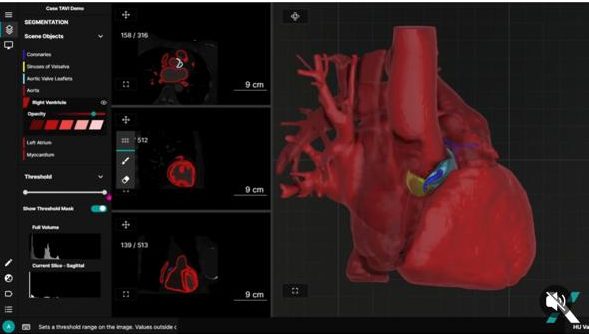
A demonstration segmentation, not a Smouha patient. The coronaries, sinuses of Valsalva, leaflets, aorta, ventricles, atrium and myocardium are separated before anyone prints a model. That is how a clinician sees the anatomy, checks whether a device can fit, and meets the difficult part of the case before the operating room.
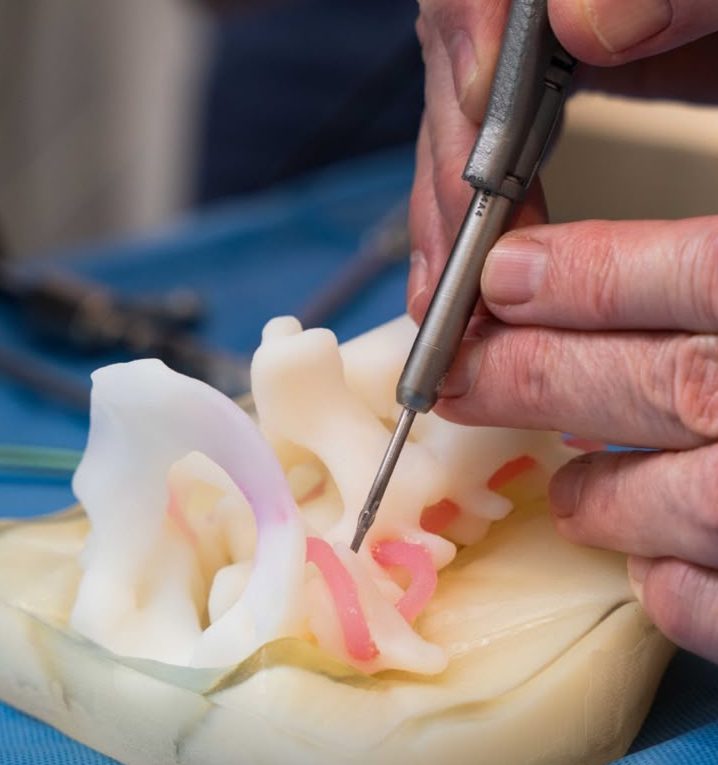
The instrument meets the model, not the patient. This is an example of a silicone rehearsal model. It was not photographed at Smouha, and MEDRA does not sell a spine line.
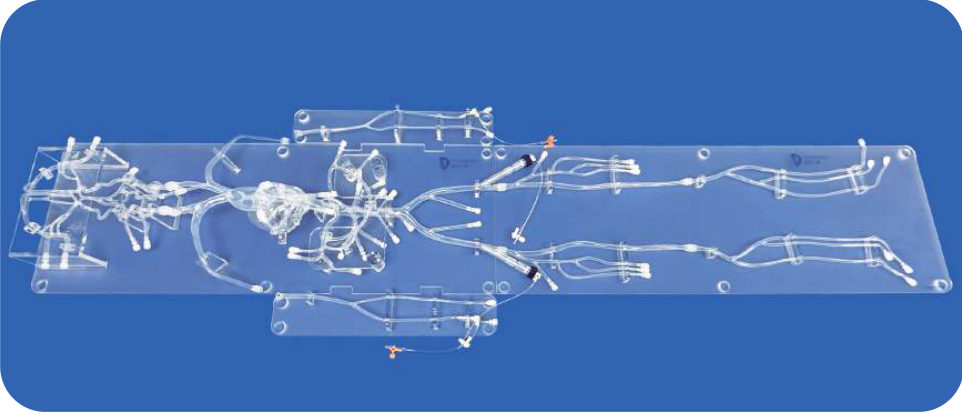
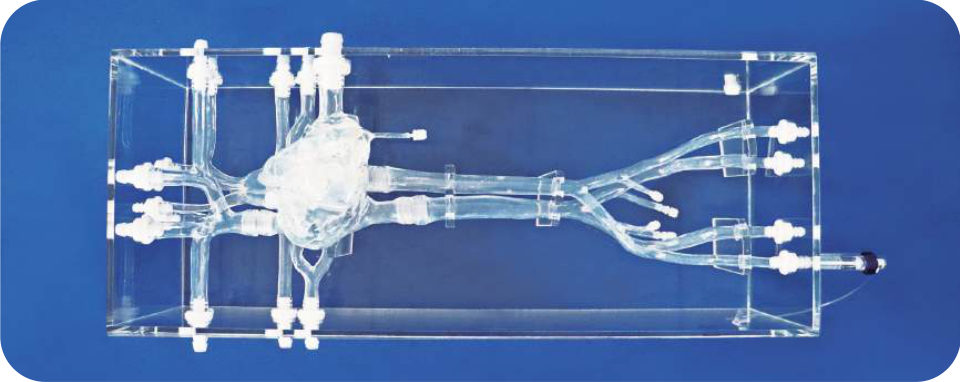
A full-body arterial phantom: a lumen a device can track. Photograph from a silicone-simulator catalogue (Ningbo Trando). It shows the class of model AEDTH is building toward. It was not made at Smouha, and it is not a supplier selected for purchase.
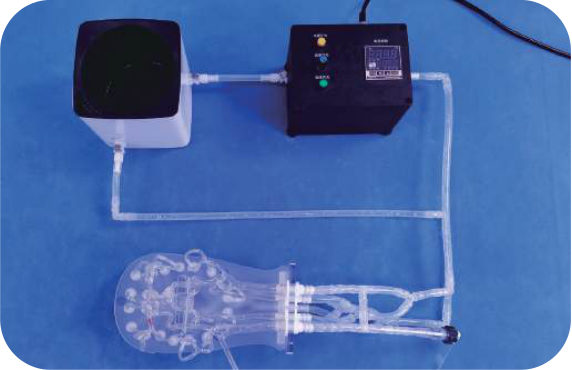
Circle of Willis on a small pump. The bench is for rehearsal and for seeing flow. It is not a clinical measurement. Photograph from a silicone-simulator catalogue (Ningbo Trando). It shows the class of model AEDTH is building toward. It was not made at Smouha, and it is not a supplier selected for purchase.
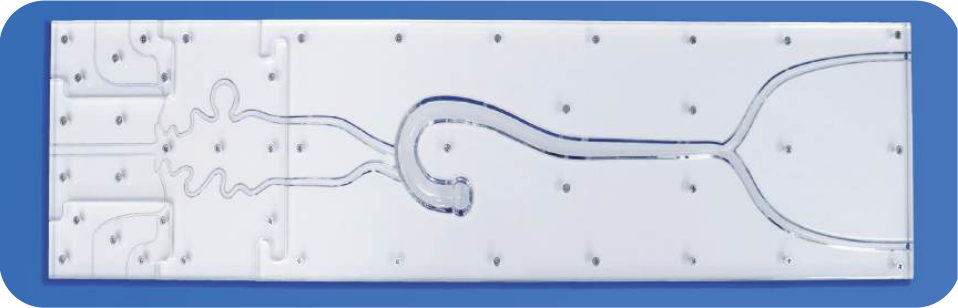
A tortuous carotid path in a flat plate. This is the insert idea: one carrier, a lumen you can change. Photograph from a silicone-simulator catalogue (Ningbo Trando). It shows the class of model AEDTH is building toward. It was not made at Smouha, and it is not a supplier selected for purchase.
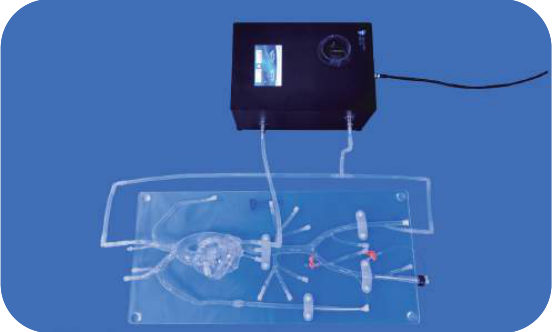
Coronary tree with a pump, and room for radial or femoral access. The lesion you swap is the consumable. Photograph from a silicone-simulator catalogue (Ningbo Trando). It shows the class of model AEDTH is building toward. It was not made at Smouha, and it is not a supplier selected for purchase.
A four-chamber heart in a clear tank, with arteries and veins. This is the shape of a structural planning model. Photograph from a silicone-simulator catalogue (Ningbo Trando). It shows the class of model AEDTH is building toward. It was not made at Smouha, and it is not a supplier selected for purchase.
A custom splint is drawn on the scan before anything is printed. A jig follows the same order: design on the anatomy, then make the part. This clip is a public design example. It is not a MEDRA device and it is not for sale.
Ten sections
S1
Imaging to design
DICOM in, a watertight mesh and a deviation note out. Patient data stays here.
S2
Silicone cast
Lost-core phantoms. The casting cell is the product, not a printed elastomer.
S3
Neurovascular
Circle of Willis, aneurysm and stenosis inserts, clear lumens.
S4
Coronary and structural
Root, landing zone, detachable coronary lesions.
S5
Paediatric and congenital
One-to-one hearts for planning and for family explanation.
S6
Aorta to periphery
Large constructs. The route — build, modular, or outsource — is still open.
S7
Haemodynamics
Flow loop and datasets. Bench, not a clinical measurement.
S8
Training theatre
Booked days and competency sheets. Inserts are the consumable.
S9
Quality system
Records, holds, and the honesty rule: a roadmap is not a clearance.
S10
Metrology
Calipers, leak test, and later imaging overlay. The room stays at 22–26 °C.
34 catalogue lines sit in this house, from year 1 through year 10.
AEDTH lines only